
The 10 most common problems with dogs
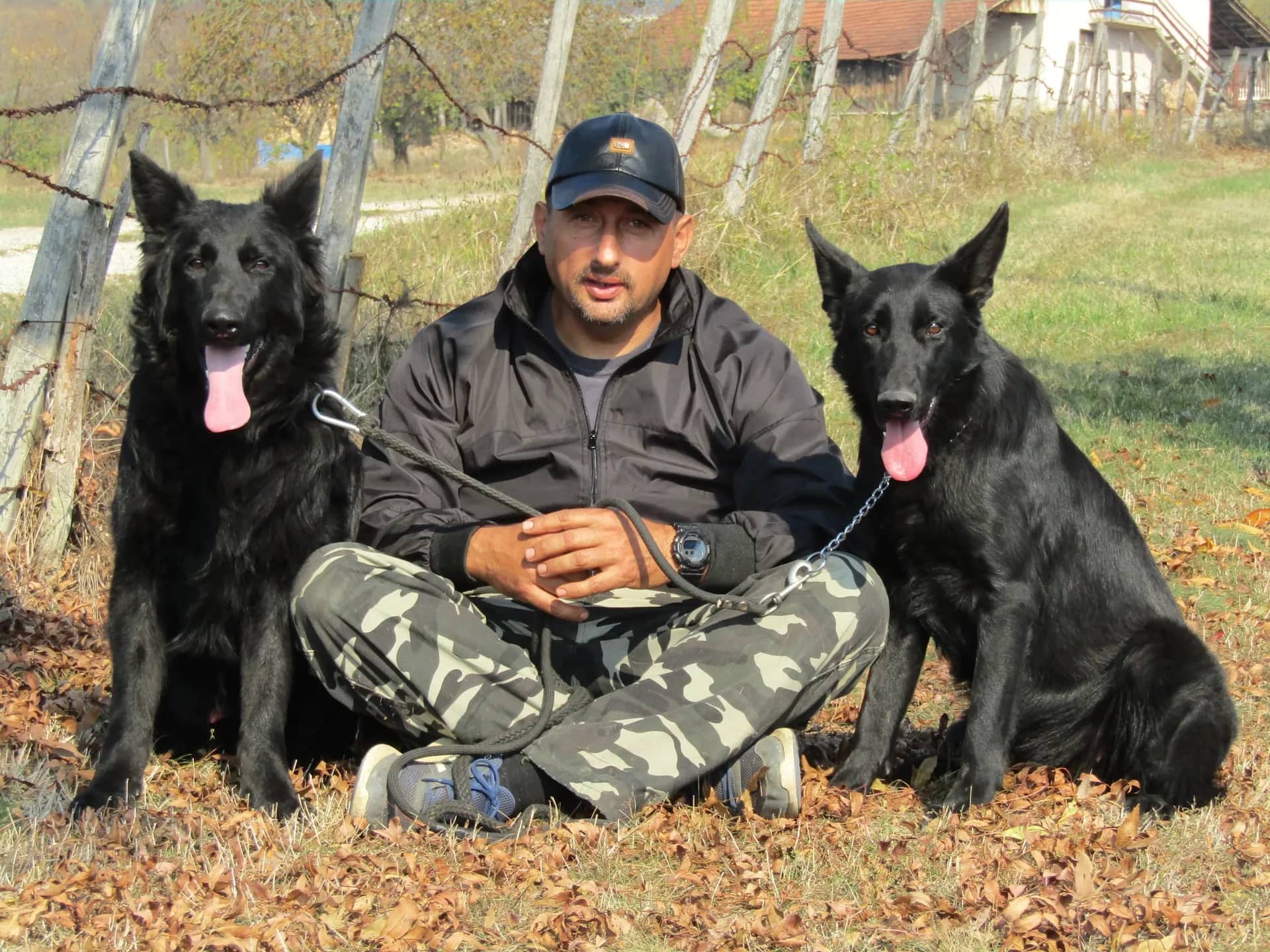
JUMPING UP ON YOU The problem of a dog jumping up at the dog park, at the front door or while you are sitting in a chair is solved by having everyone who interacts with the dog refrain from giving it any verbal or physical praise when it jumps. As with many dog behaviour problems,
JUMPING UP ON YOU
The problem of a dog jumping up at the dog park, at the front door or while you are sitting in a chair is solved by having everyone who interacts with the dog refrain from giving it any verbal or physical praise when it jumps. As with many dog behaviour problems, there is more than one effective way to solve the problem, and you can combine several to get results:
- If your dog mainly jumps at the front door out of excitement when guests arrive, call it to come and sit next to you until it calms down a little. At the same time you are showing it that this is not the way to get your attention.
- Gently take hold of its paws when it jumps, but do not look at the dog and ignore it for a few moments. That way it will realise that this is not as much fun for you as it is for it.
- The knee push is a gentle, slow physical nudge to move the dog away from you.
- Put a leash on it and stand on the leash with your foot, especially when guests arrive who do not yet know the rules for greeting the dog. At the moment you know the dog is about to jump, step on the leash to restrict its jumping.
- If the dog starts to jump and you have said NO, and the dog obeys and sits, praise it and give it a treat, but only if you are sure it will not jump again at that moment, because the dog associates the reward with what it is doing at that moment.
BEGGING FOR FOOD WHILE YOU EAT
This is one of those problems in which the whole family has to take part. Children who secretly drop food under the table are a major obstacle to achieving the desired goal. Dogs are very intuitive when it comes to sources of food. To teach your dog not to beg, you have to teach it that your food is always out of reach and that it will get a reward later if it does not beg. Never give your dog human food. Limit its space. Your dog should not be in the kitchen while you are preparing food or eating. Instead, tell your dog to go to its place while you eat.
Give it a toy or another good treat to keep it occupied while you eat. Be consistent. If your dog always goes to its place when you have lunch, it will have no opportunity to beg for food.
STEALING FOOD FROM THE TABLE
Teach your dog self-control. If your dog tries to steal food from the table, it lacks self-control and awareness of what is its and what is yours. Teach your dog to wait before you give it anything it wants. Your dog should sit and stay sitting before it gets its food bowl, before you throw it the ball, before you put on its leash and before you do anything your dog wants to do. Leave your food on the table and do not let the dog take it. When it obeys you, give it a treat, and after that a full bowl of its own food. Every exercise takes time, and so does this one.
BARKING TOO MUCH
It is natural for dogs to bark to warn of potential dangers or new things in your environment and to communicate with other dogs and animals. You probably want your dog to bark sometimes, such as when someone is at the door, but you do not want it to bark constantly. Here are a few things you can do to stop the barking.
If your dog barks at everything it sees through the window, one solution is to cover the window. Some dogs will stop barking when there is nothing visible to bark at. Call your dog in a way that shows it you understand that something is there and that you do not want it to bark at it any more. Reward your dog when it comes to you and stops barking, so that it learns you want it to be calm and not bark. Teach it that when you say QUIET and put your finger to your lips, you want silence. Every time it stops barking, give it a treat, so that eventually your dog will understand the meaning of this command and respond accordingly.
DESTROYING THINGS AROUND THE HOUSE
Chewing is not only a normal and natural activity for dogs, it is also necessary for maintaining dental health and relieving anxiety. Dogs look for all kinds of different materials to chew, especially when they are puppies. Dogs explore the world through their mouths. Provide chew toys that are suitable for your dog. Offer a wide range of safe materials to chew, including rubber toys. Redirect the dog when it starts chewing things around the house or shoes: shout NO loudly and give it one of its toys. If it destroys things when you are not at home, the best solution is to bring in a crate and leave the dog in it when you are away from home. Put your dog's favourite toys in the crate. We also recommend a short, round wooden stick, which dogs love most of all.
RELIEVING ITSELF IN THE HOUSE
If you have adopted an adult dog that has never had a family or lived in a house, you will have to start working with it as if you were dealing with a puppy. When a dog lives in the house and relieves itself all over the house, it is best to confine it to a crate with a blanket where it will sleep, because a dog usually does not relieve itself where it sleeps. At the same time the dog gets used to where its place is, and this will also prevent wilfulness from developing. As soon as it comes out of the crate, the dog is taken outside. Take the dog out three times a day to relieve itself. Wait for it to do its business and then praise it loudly. Dogs go by scent to decide where to relieve themselves. They always return to the same spot. Once the dog has learned where the place for relieving itself is, remove the crate and put a bed in that spot, which will be its place. At night, restrict its space until the dog gets into the habit of going to its place at night. If the dog relieves itself in the house, scrub that spot thoroughly with apple cider vinegar, because the dog is always drawn back by scent to relieve itself there again. Take the dog for a walk and be sure to wait for it to relieve itself, after which you can play with it, and when you come back into the flat or house, put it back in the crate. This is very important for building the toilet habit. Coordinate your obligations with its feeding. Routine is the fundamental thing in training your dog.
RUNNING AWAY FROM THE YARD
If your dog runs off as soon as you open the yard gate or the front door, you have not only an unpleasant but also a very dangerous problem. Dogs that joyfully run away from their owners are unaware of the dangers around them, such as streets with cars, and they will probably get lost. Since running away can be great fun for your dog, that is, your dog enjoys running free and playing, you may need a lot of training to convince it not to do it. If you keep your dog busy, giving it as much activity as possible, such as long walks, ball throwing and agility training, that will tire your dog out nicely and satisfy its desire to run in a safe and constructive way. Walking on a long rope attached to the dog's collar will also help you here. Play with it, and as soon as you notice the dog wants to run off, step on the rope with your foot, take hold of the far end of the rope and slowly draw it towards you. Hold the end of the rope, have someone else open the gate, and when the dog starts to run, pull the rope and show it a toy or a ball so that the dog understands you want it to stay there and play with you. It may take you some time doing this exercise before you have any effect on your dog's behaviour. Use every opportunity to practise whenever the gate is opened.
BITING THE OWNER
It is normal for puppies to play roughly with each other and with their mother. Puppies learn from each other how much rough play is acceptable and when a bite hurts. They also learn the consequences of overly rough play when their mother or their littermates correct them for bites that are too hard. When a puppy starts its life with people, it has to learn how to adapt its previous play behaviour to appropriate behaviour with its new family. If people do not teach the puppy how to control its play biting, the puppy grows into a dog that plays too roughly. Due to a lack of exercise or mental stimulation, rough play can become more intense and lead to real bites. It is not good for a dog to lose control during play, because its drives build up too much. Whether you have a puppy or an older dog that has never learned good manners, it is important to teach it self-control and appropriate behaviour. No matter how old your dog is, the steps are the same.
Redirect play with you whenever your dog bites your trouser leg or jumps up, by putting a toy in its mouth (we recommend jute sausages or pads for larger dogs) and encouraging it to play with the toy. Soon the dog will run to you with the toy when it wants to play instead of nipping you. The dog will get the satisfaction of being able to bite, shake and tug something, while you will be able to play with it safely. Sometimes it will still want to bite you even though it knows it should be playing with its toy. If the dog ignores your attempts to redirect its attention to the toy and keeps biting you, it is important to stop that behaviour. It has to learn that this kind of nipping means you will not play with it.
PULLING ON THE LEASH
A dog that pulls on the leash during walks is a common and serious problem for dog owners, especially those with large dogs. You can easily get hurt when the dog pulls you. It is not impossible to teach your strong dog not to pull, but it takes patience and persistence to achieve a successful result. If the dog is too strong for you to control on an ordinary leash, it is a good idea to use a long rope. Dogs pull for several reasons, including excess energy. If your dog is overly energetic, it will take a lot of work and training before training on walks becomes possible. First train where there are no distractions, such as other dogs and animals, scents in nature and so on, and only then start training where there are distractions. Start the walk at a slow pace, then slow down even more and let the dog move a little away from you while you keep it on the leash. As soon as the dog starts pulling, slacken the rope, do not pull, and start walking again but in the other direction, calling the dog, so that the dog learns to follow you.
AGGRESSIVE ON WALKS
The first and basic rule in such cases is to avoid walking areas where there is a chance of an attack by another aggressive dog. When meeting other dogs, let them greet each other in dog fashion, by sniffing. Do not jerk the leash suddenly; instead relax it so that the dog, out of tension, does not make a gesture the other dog might interpret as aggression, using only short warning tugs on the leash. As soon as you notice aggressive body language in your dog when meeting another dog,
you must react preventively at once, well before the dogs meet. At that moment you must strictly control and suppress the dog's drive. Learn dog body language. Recognising such a reaction at the very start, you must act immediately. The NO command must be quick and effective. When a dog raises its tail, its hackles and its ears, opens its eyes wide and pulls back its lips, it is showing a sign that it is ready to attack. With its whole body it will try to look as big and dangerous as possible. Take your dog for walks as much as possible and socialise it by spending time with other dogs. Do not let the dog lose trust in people. Use every moment to have one of your friends treat it to a snack, pet it and praise it in your presence.
If you have adopted an aggressive dog and are trying to teach it new good habits while suppressing the bad ones, you will need to work with it for a very long time until it gains trust in you.
Comments(7)
Uros
Postovani imam staforda, miran, naucen na decu od samog pocetka nikad ne napada drugog psa dal veceg ili manjeg ali ne zna granicu pa se prezagra sa jacim psom i onda uvek nastaju problemi. Skace po njima ne zna da stane.
Jasmina
Naš pas ima 8 meseci. Ne možemo da je naučimo da ne ujeda u ugri ali ujeda jako. Skače i u skoku grize pa bude baš bolno. Mislila smo da će da prođe dok joj ne izađu zubi. Jeste se malo smirila ali ke gruba a u isto vreme veoma mazna.
Bozana
Udomili smo psića kog je neko ostavio zavezanog uz stub pored ulice. Lepo jede, mirna je, ne laje, raduje nam se. Vesela je kad ide napolje. Ali u kući uglavnom leži na dekici i odmara. Kad joj tad priđem hoće režati. I nikako ne voli da budem u položaju iznad nje, počne režati i lajati. Kad čučnem i mazim je opet negoduje ali manje. Zašto to radi? Drugi dan je kod nas😟
Violeta
Postovani, Imam psa starog 8 godina rase basset,zivi napolju ima svoju kucicu,miran je poslusan nikakav problem sa njim nema,ali odskora imam i jazavicarab isto muzjak igraju se nikakav problem medju njima inace on ima 2 godine,ali retko kad ga pusti da udje u kucicu tako da ovaj veci ostaje napolje i zapomaze da se izadje i pomogne mubda udje unkucu. Sve sam probala i efekat nikakav na kraju se nosim mislju da napravim novu za veceg iako je on stariji i veci ali sanse da se izbori sa njim su nikakve jer je inace on velika maza,pa ako imate ikakvu ideju molim Vasbda me posavetujete Hvala unapred
Mila
Gospodine, Imam psa bisona koji je star godinu ipo dana. Uplasio se od ogromne buke aviona i sada nesme napolje trese se kao prut..sta da uradim. Od srca Vam hvala na vasem odgovoru. Pozdrav Mila
DUBRAVKA BALOG
Postovanje Prije 4 mj sam udomila mjesanku malu oko 3 godine. Jako je dobra i sve je superali me zanima kako ju nauviti da obavlja nuzdu u svom dvoristu, kada smo doma idemo redovito u setnje ali je problem na moru gdje imamo veliko dvoriste ali nece nista obavljati u njemu a problem je voditi psa da obavi nuzdu na plazi jer tamo to obavi bez problema. Kako da ju naucim da to obavlja u dvoristu Lp Dubravka
Tanja
Postovanje.Imam muzjaka francuskog buldoga koji ima 13 meseci.Dva najveca problema su lajanje i kako da kazem preterana hiper aktivnost kad neko dodje.Bukvalno poludi.A iste te kad vidi napolju dobrica je i da se mazi i igra,ali u kuci nikako.I drugi problem su nam psi dok setamo.Za goste pokusala sam sve i da je premoren,koska,nagrade sve je kratkotrajno.Sta da radim