
Short instructions for training your dog
DOG TRAINING INSTRUCTIONS. So, from the earliest days, as soon as a dog appears in your life, the process of socialisation begins. Do not fall for the misconception that a dog is too young for training. Such irresponsibility towards your own dog in terms of socialisation and creating good habits can be lost for good. Through preventive action in the communication
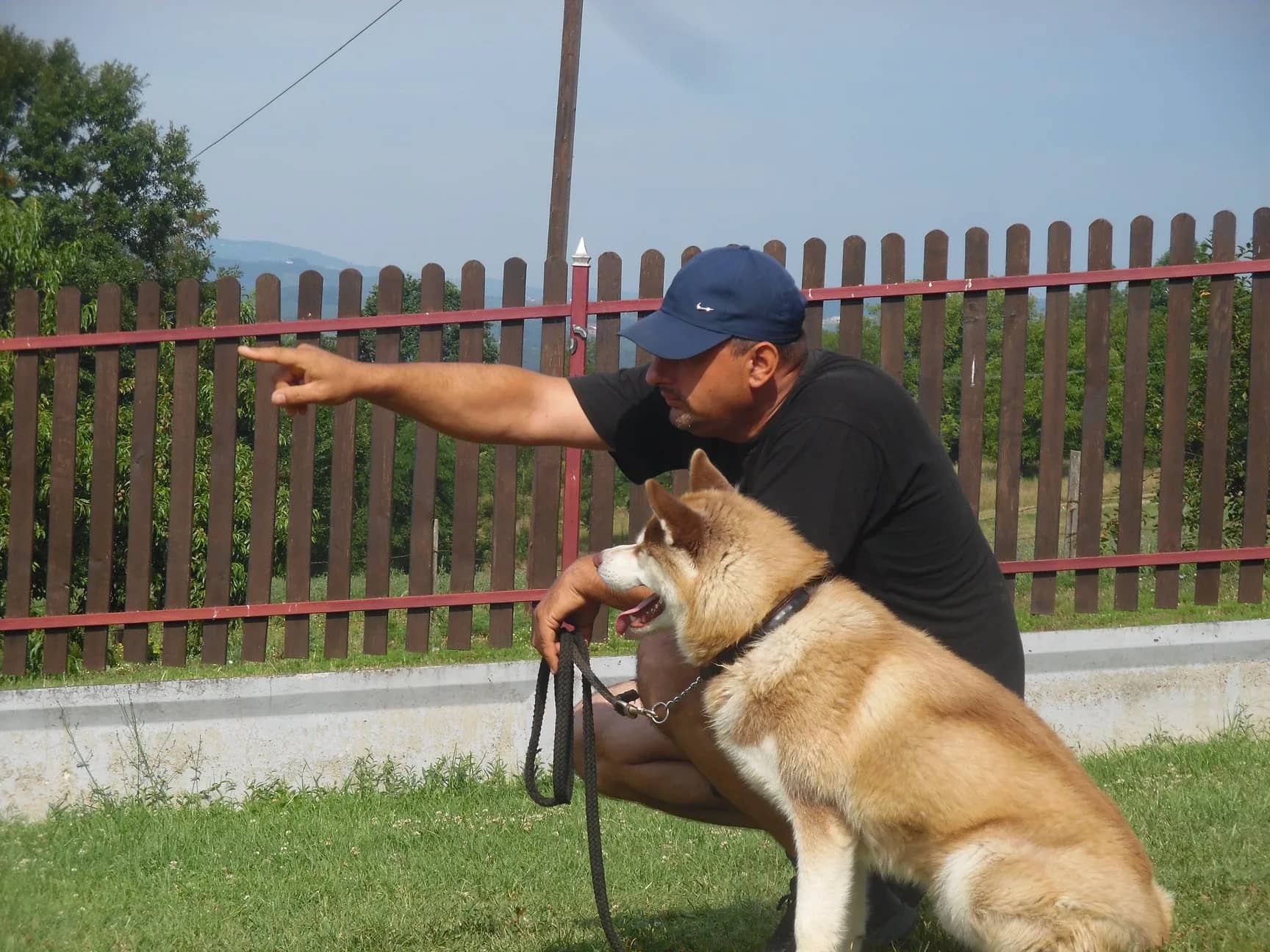
DOG TRAINING INSTRUCTIONS
- CANINE PSYCHOLOGY: When we talk about canine psychology and the way dogs experience the world around us, we cannot avoid mentioning the basic fact that dogs are creatures of habit. Many dog lovers completely forget this most important fact and attach all sorts of labels to their dog, treating it as if it were human. Unfortunately for them, this is exactly where, in the earliest period of a dog's life, communication problems between the dog and its owner begin. By giving the dog every freedom and demanding nothing in return, believing the dog will respect them for it and therefore obey them, they open the door to wilfulness which, depending on the dog's character, can cause many minor and major problems in communication. So this time I must pass on what is perhaps the most important message for establishing good habits in a dog: WHATEVER YOU DO NOT WANT YOUR DOG TO DO, NEVER ALLOW IT TO DO IT, EVER
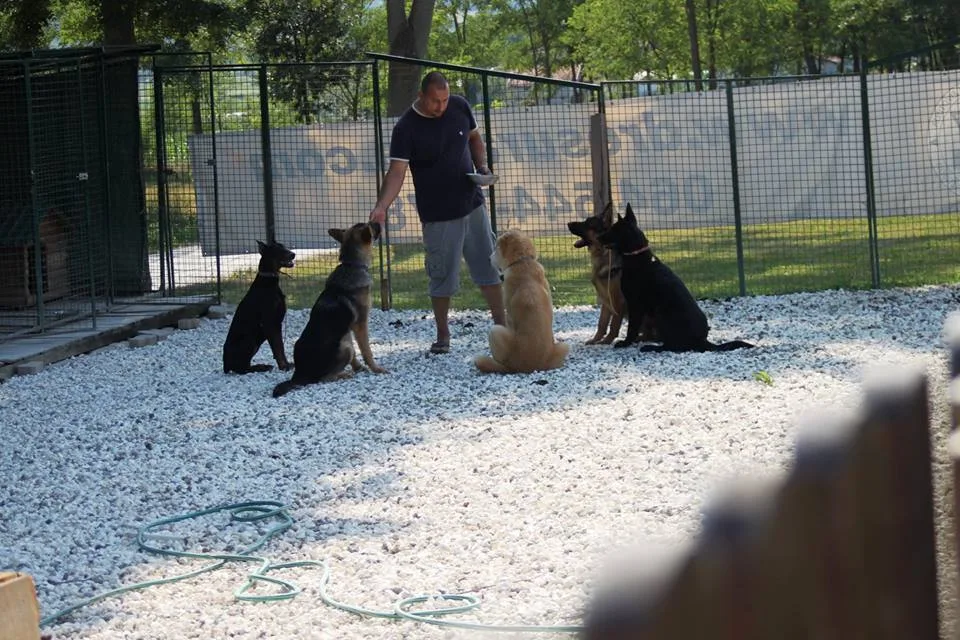
So, from the earliest days, as soon as a dog appears in your life, the process of socialisation begins. Do not fall for the misconception that a dog is too young for training. Such irresponsibility towards your own dog in terms of socialisation and creating good habits can be lost for good. Through preventive action in the communication between human and dog we can achieve results. Every freedom a dog has, and every forbidden thing it does, stems from the fact that its owner allowed it. Do not elevate your dog to such heights by equating its intelligence with a human's, because in the end it will always be an animal governed by its instincts for survival, hunting, prey, guarding, mating, play and so on. If you give your dog the freedom to do things that are permitted from its point of view, it will form that kind of habit.
Give it 1 % and it will use it. Give it 100 % freedom while demanding nothing from it, and it will use every single percent. So no matter how much each of us loves our dog and wants to give it the best life and the best companionship, with mutual trust and friendship, the only way to succeed in that is the path on which you must present yourself to the dog as its leader: you to it, not it to you.
I can freely call dog training the organised control of a dog's behaviour while introducing new habits. Whatever the problem in communication between a dog and its owner, almost every time the main culprit responsible for the dog's behaviour is the human.
Depending on the dog's character, which shows itself in various ways such as timidity, hyperactivity, dominance and so on, we change only the level at which we impose our authority and our will, from a gentle approach to a very authoritative one, meaning we approach timid dogs gently and dominant dogs with the attitude of a leader.
What never changes in any case is our consistency in imposing our will while correcting a dog's behaviour. In any exercise you do with your dog, you must be one hundred percent sure that you have not given the dog a single moment in which it can make decisions. In my experience, this process of establishing communication with a dog takes only about ten days, but stabilising the habits through training takes around three months.
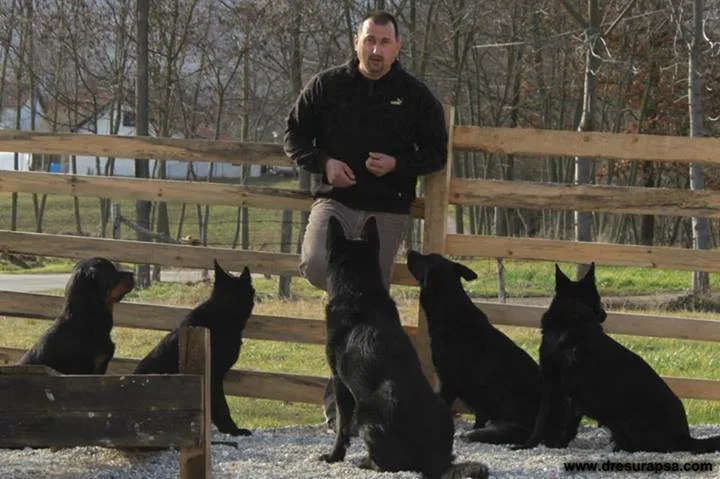
What makes a dog special is that it is an emotional creature that quickly bonds with its owner.
Of course, that is no guarantee the dog will obey well, and this is exactly where the basic mistakes arise.
The basic premise when introducing new habits in dogs should be the owner's will, imposed through a series of exercises for basic communication and constant preventive control of the dog's behaviour.
Working with a long line over a period of three months gives us a high guarantee that the dog will form new, good habits in line with our needs.
- EXERCISES WITH YOUR DOG
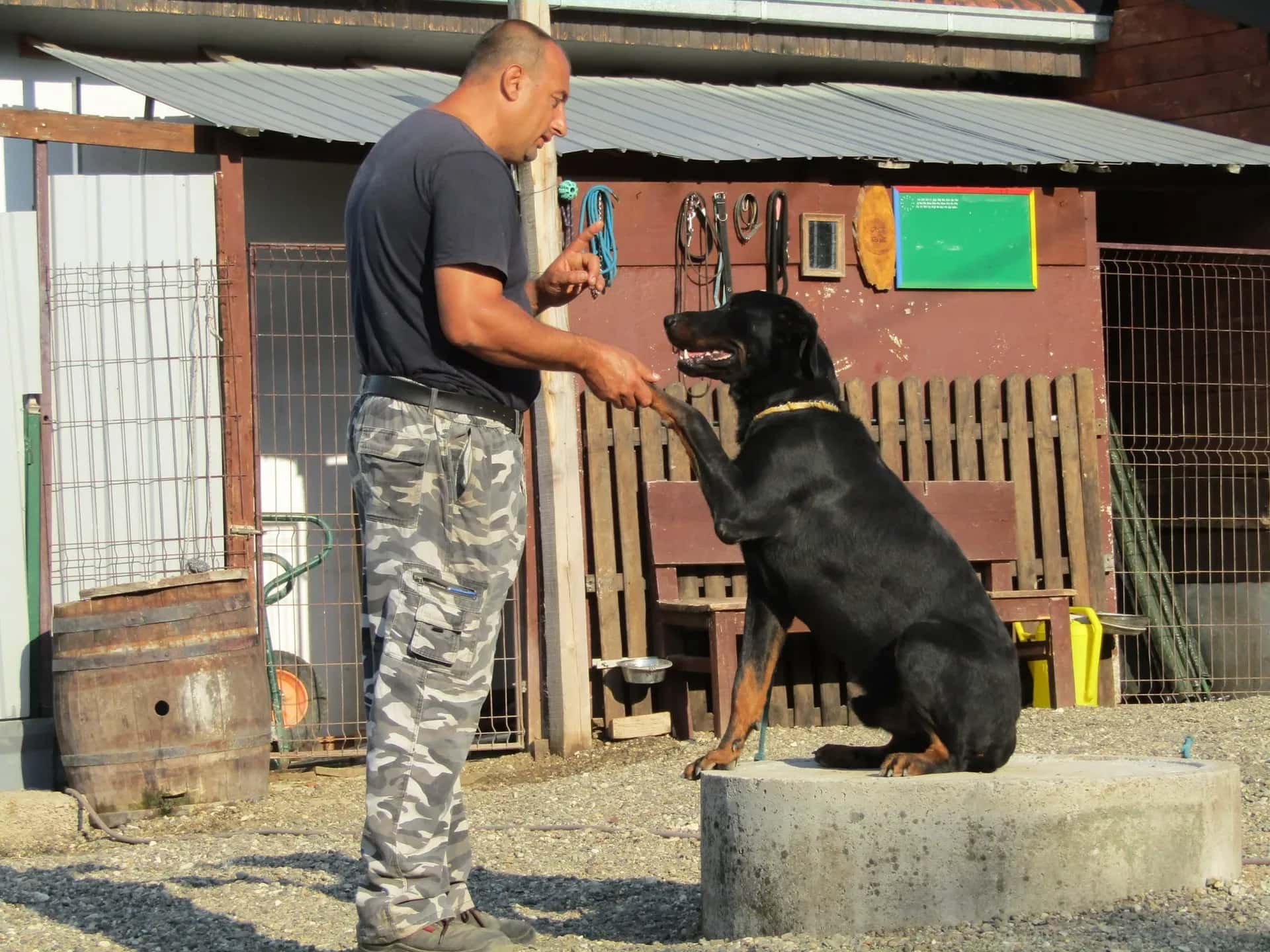
It is important to note that you must be consistent in everything you ask of your dog. For example, if you ask the dog to lie down and it keeps getting up, you must be consistent and return it to the starting position every time. Sometimes, until the dog understands what you want from it, this process may be repeated 20 to 30 times during an exercise. The very next time you do the same exercise with the dog, you will see that it performs it better and faster. Praise your dog with rewards every time it has completed its task well.
- I do all the exercises with the dog on a long line and at short distances, to rule out any possibility of the dog taking a step on its own.
- I play with the dog only when I want to and for as long as I want, because the prey drive during play can sometimes grow so strong that there are dogs that may unintentionally bite you, since when the play drive rises, an animal's capacity for judgement is very low.
- I never allow the dog to jump up on me, because that is an instinctive attempt to dominate. I push it away with the command "no", or step on the line so it cannot jump on me, and as soon as it comes to me I give the command "sit".
- The dog must not take food without my permission, because food is the resource through which I show it that I am a better hunter than it is.
- I enforce heelwork with sudden changes of direction. I hold the lead loosely, not taut, but I use short tugs, because I am the leader it should follow, not the other way round. I always walk the dog on my left side. I do not allow the dog any sniffing during this exercise, so it is best to do these exercises on a concrete or asphalt surface. The best collar for this exercise is a plain metal choke chain without prongs, because it teaches the dog to respond to its sound when tugged
- For the "sit" and "stay" commands I impose my will by circling around the dog, which stimulates its instincts and thereby builds better mental stability. While it is lying down you step over it and it must not get up. With the line you control what you expect it to do. By tugging the line, giving a loud command and signalling with your hand, you impose your will.
While the dog is lying in its place, do not call it to come to you, because the dog should always expect you to come back for it.
- The recall command is regulated with the line, with which I impose a limit on the space and distance between me and the dog. I reward every recall either with food or with praise. I never call the dog if I am not in a position to grab the line in case the dog does not respond to my command. At first the exercises are done only in the yard, where there are no distractions, and later, once the dog has learned what you want from it and you have enough confidence in it, you go to places where there are distractions.
- I deal with aggressive behaviour and barking with a water pistol, spraying the head together with the command "no".
- I deal with digging holes in the yard by putting the dog's faeces in the holes it has dug.
- I deal with stealing slippers and shoes by putting all the footwear away except one old shoe, which I tie with a line to an object (a pot or similar); when the dog takes that shoe, the pot falls and startles it, and after once or twice the dog stops doing it.
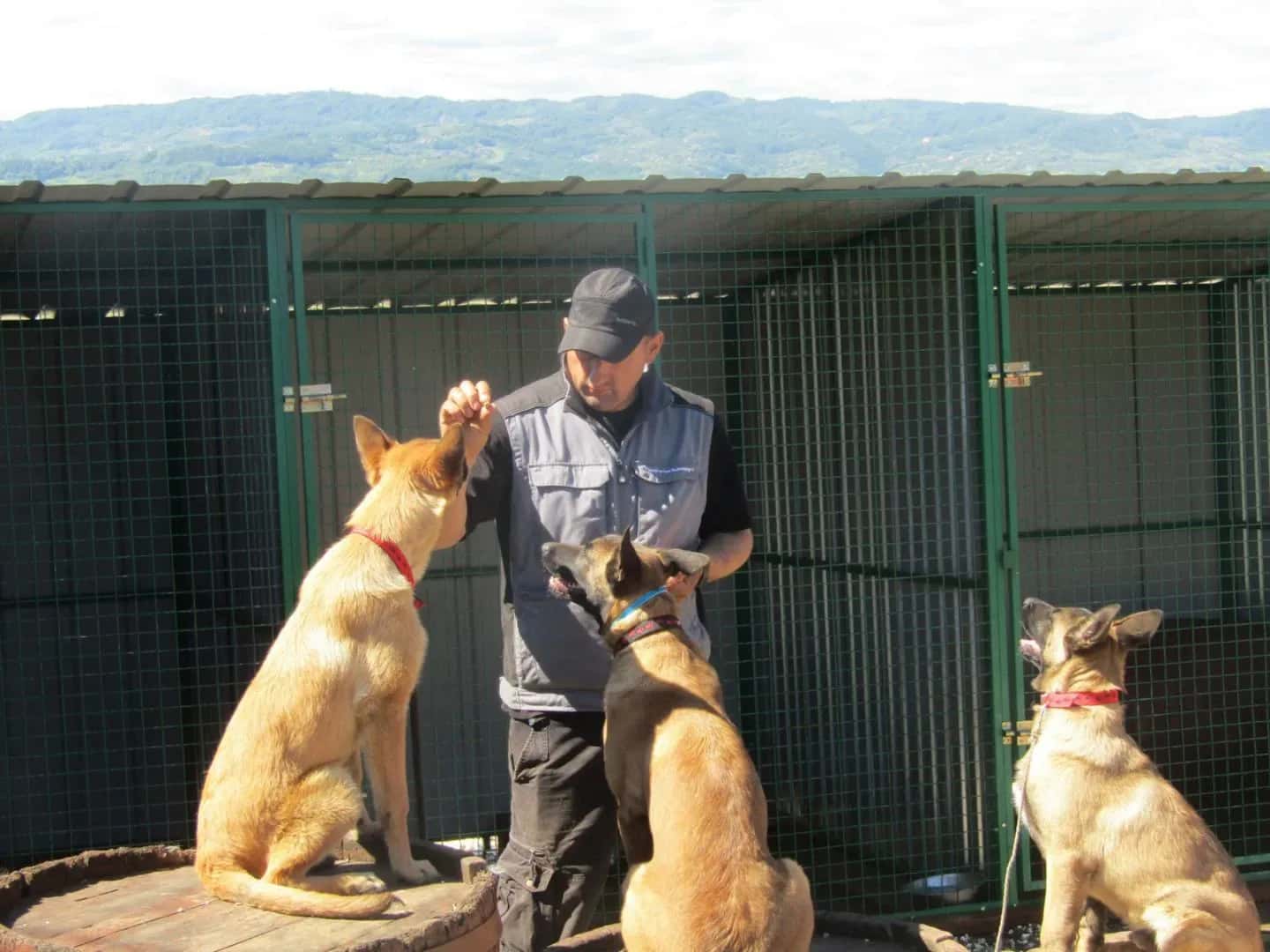
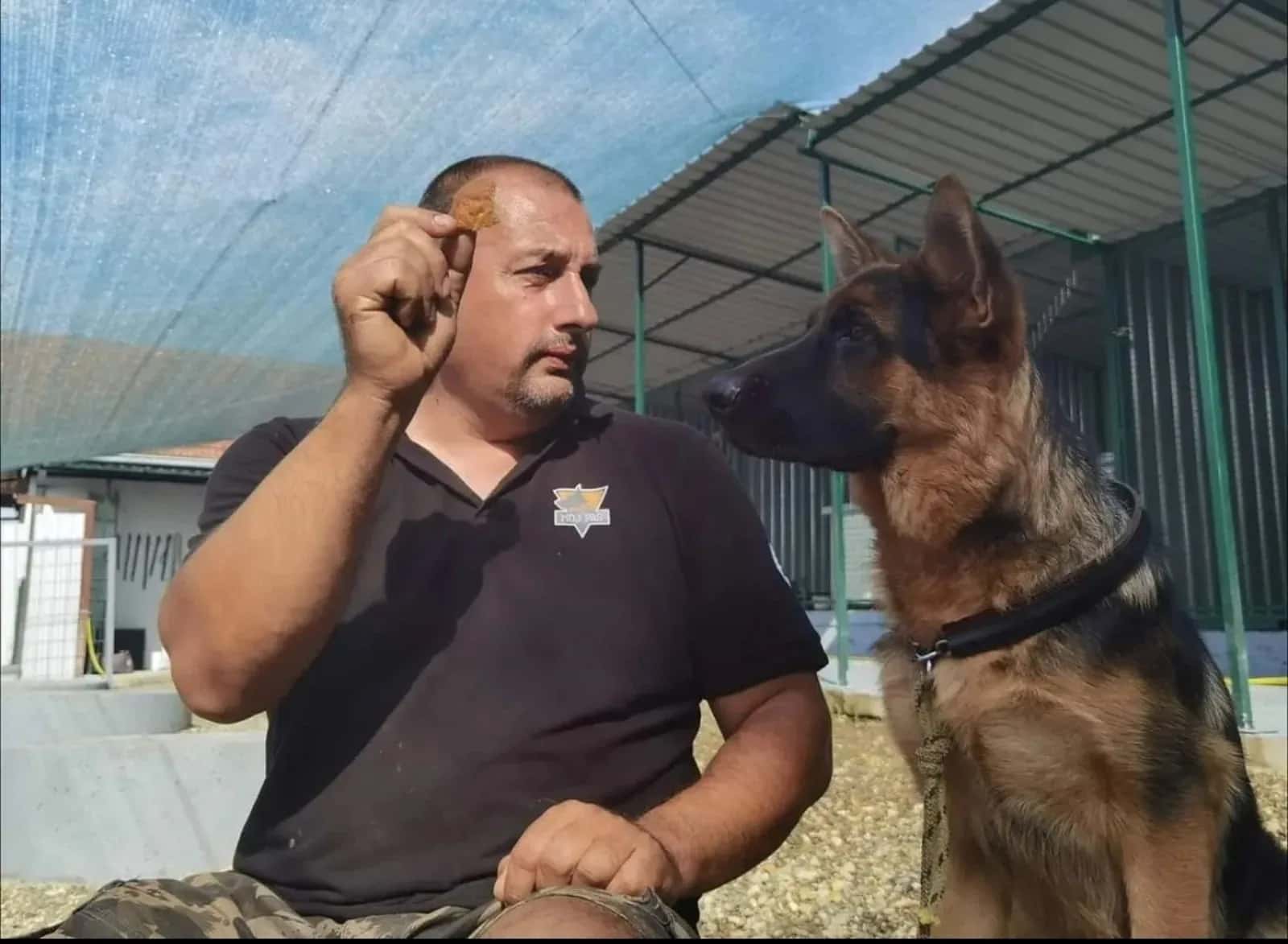
- I praise every good behaviour in the dog and reward it with small pieces of good food so that it associates them with something good, because then it will perform them willingly.
- When entering or leaving the house or yard, I go through the door first, so that the dog understands that I am the leader it must follow.
- If I am not sure about the dogs' behaviour, I first let them into an enclosed area to run, but always with the line on the collar so that I can control them even then.
- If I work with dogs in the house, then a 1-metre line stays on the collar at all times, because that is how I manage the dog so it does not climb on the bed or sofa, or if it tries to hide under the bed and so on. In this way the dog quickly understands that we can control it at any moment.
Communication with dogs indoors goes faster because there are no outside distractions, but as soon as I go outside with them I replace the shorter line with a longer one, so that I can control the dog more easily.
All the techniques I use are very simple, but they must be accompanied by consistency and persistence until the dog accepts the new patterns of behaviour.
Remember that the dog will closely watch every moment of your weakness and insecurity in order to use it to its advantage.
Do not let it do what you do not want. If it plays dumb, see things through to the end.
Only then reward it generously, if it has met your expectations.
Never hit your dog, because that way you lose its trust and communication becomes extremely difficult; instead, be persistent in imposing your will through humane ways of handling an animal.
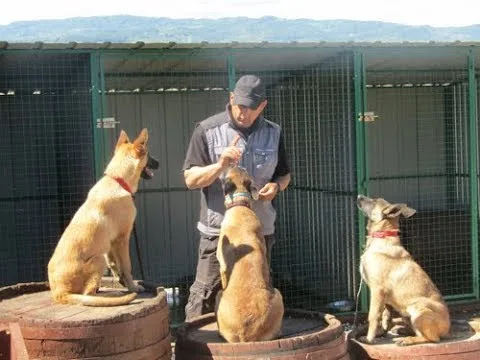
Recommendations:
- Be sure to introduce meat into your dog's diet as a stimulus for obedience. Never give it food until it has carried out at least one of your commands. The dog cannot take food without your permission, because that is a resource you control. By controlling its food you will teach the dog to obey you.
- While the dog is getting used to new habits, the line stays on the collar for 90 days, and you take it off in the kennel run. Outdoors use a 5-metre line. For the first 15 days the place where you exercise with the dog is the yard, and after that the locations change every 7 days.
- The dog always walks on your left side so that your right hand stays free.
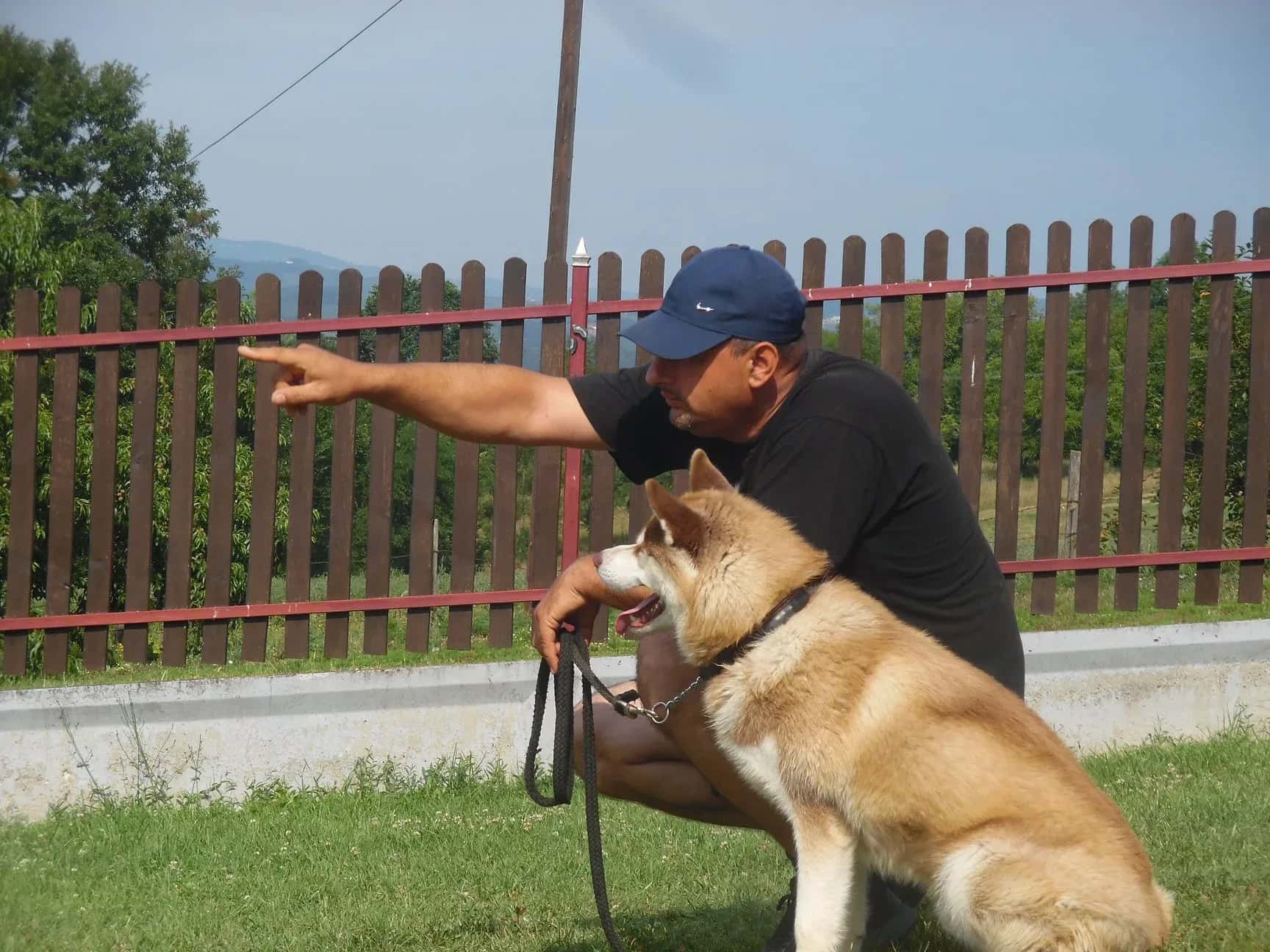
- Whatever you say to the dog, also use gestures and body language, which dogs understand much better
- If you are not in the mood that day, do not work with the dog.
- Exercises last a maximum of 20 minutes and are always done when the dog is hungry; feed the dog afterwards.
- For guard dogs, a fenced yard and a kennel run are essential, with a sign indicating that there is a dangerous dog in the yard. If the dog has a run, it must stay in the run, because that is its place and its sense of security. The dog is let into the yard only under your control and supervision until it is one year old; if you allow it to be alone in the yard, the dog develops wilfulness.
- Alongside imposing your will, positive stimulation through play and praise is very important.
mydogserbia@gmail.com
+381 64 544 7778
SERBIA-ČAČAK
Humane dog trainer Slaven Stevelić
Comments
No comments yet. Be the first.