
How a Dog Matures!
In the first days of its life, a puppy cannot yet hear or see, but its sense of smell is already fully developed. For the first three weeks, its mother's milk will provide everything it needs to live. From the third week, the puppy's senses awaken. Its eyes and ear canals open so that
In the first days of its life, a puppy cannot yet hear or see, but its sense of smell is already fully developed. For the first three weeks, its mother's milk will provide everything it needs to live. From the third week, the puppy's senses awaken. Its eyes and ear canals open so that it can communicate for the first time. At around 21 days it will make its first attempts to walk and bark. In the fourth week an important stage of development begins, because the senses are fully developed and the puppy can observe its surroundings attentively. It sniffs everything in its environment. Puppies are very curious and energetic. At this stage of life their capacity for learning is at its greatest.
Between the 8th and 12th week the puppy is in the socialisation phase. The best time to separate it from its mother is the 10th week. Experts call the development up to the 16th week the “hierarchy phase”, because the dog is looking for a “pack leader”. When you raise your dog on time and properly, with correct socialisation, it is possible to prevent many of the problems that so many dogs suffer from today, along with their owners.
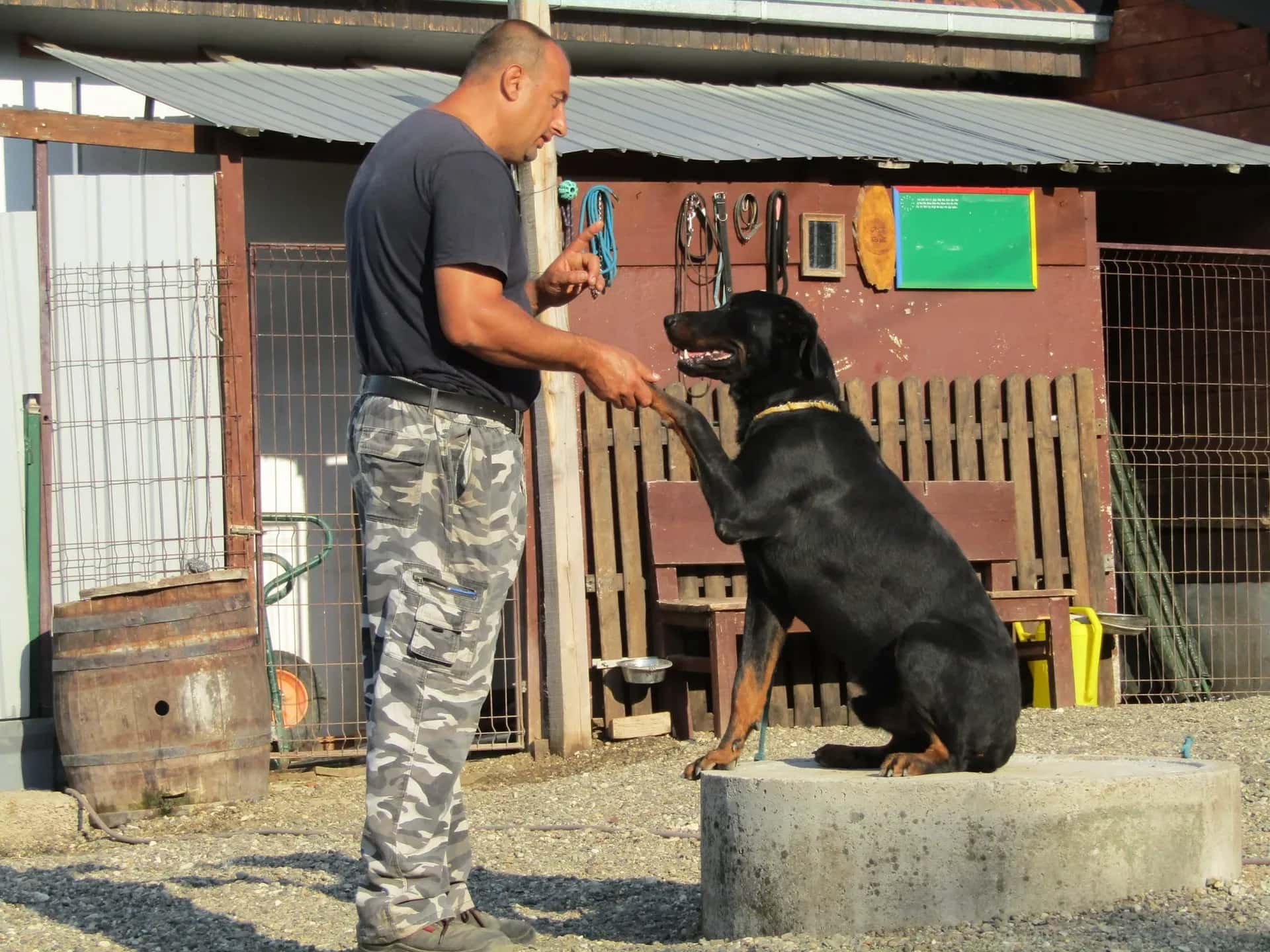
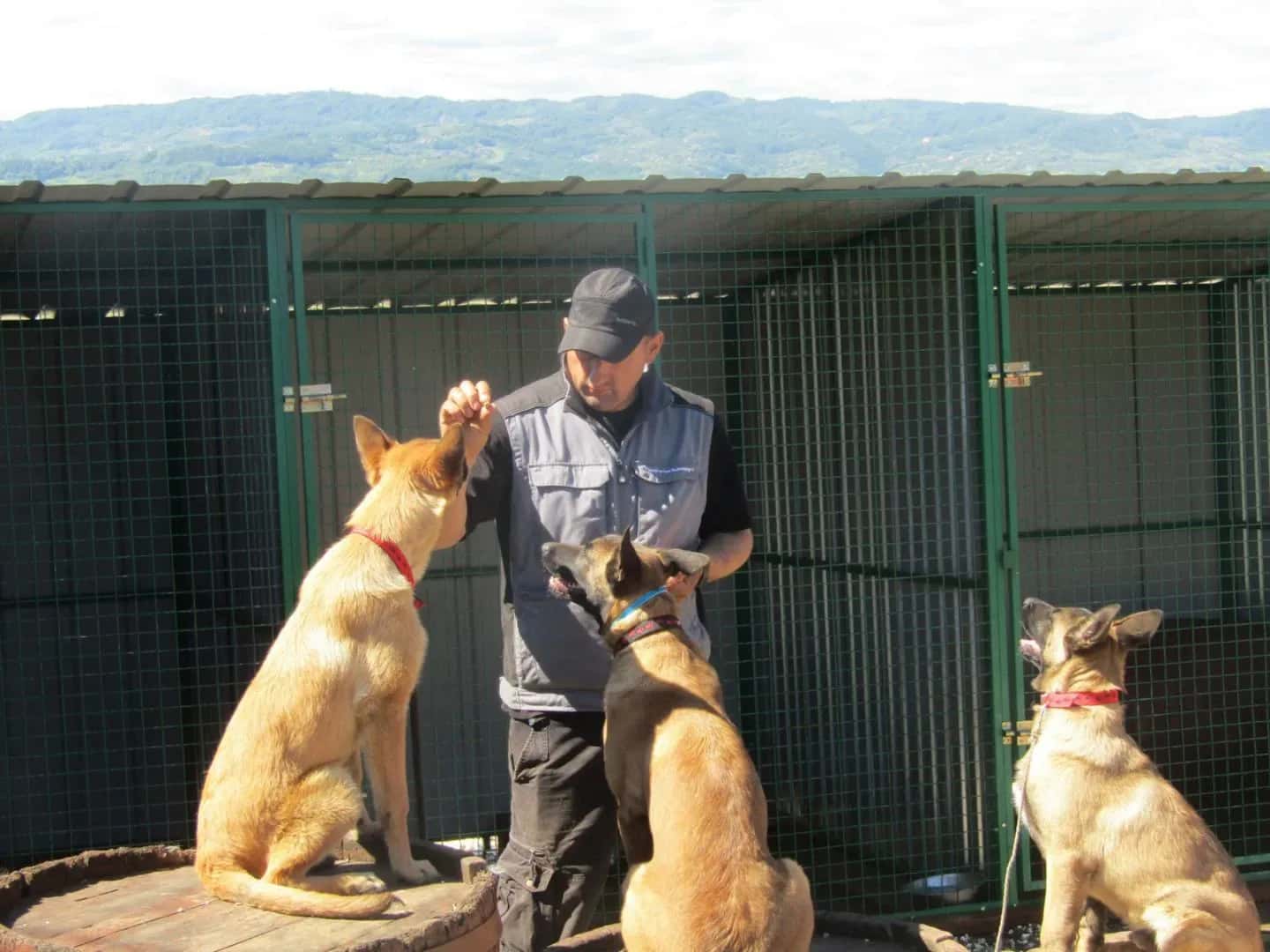
Raising a dog means adapting it to life and cooperation with people and getting it to accept its owner as the leader of its new “pack”.
The puberty phase is usually fairly short and lasts roughly between a month and six weeks. It begins around the sixth month and can manifest in quite different ways: the dog is often clumsy and unruly and refuses to learn. A male has passed puberty when he first lifts his leg to urinate, and a female when she goes into her first heat. A female should not be mated during her first heat because her organs are not yet sufficiently developed.
During a dog's maturation, its diet is extremely important. It is especially important that the dog always has enough water, which is crucial in its daily diet. Otherwise, if the dog does not take in enough water, its health can seriously deteriorate, since water is responsible for a balanced body temperature as well as for the flow of most nutrients through the body.
During growth, and later too, proteins are responsible for tissue renewal and strengthening immunity. They are found in meat, eggs, dairy products, cereals and so on.
Carbohydrates are also suitable as an additional source of energy for the dog, and they are found in numerous grains and other root vegetables. Besides these two basic components, a dog's diet should also contain appropriate vitamins and minerals, which are used to strengthen bones and to improve the vital processes in the body that are responsible for healthy immunity and proper gland function. People often think that a dog can digest any food, including what they prepare for themselves. Such assumptions are the cause of many illnesses in dogs, because they need specific amounts of certain substances to bring their body weight and fitness to an optimal state, and a typical human diet is completely inadequate in that respect. Always consult your vet, who will give you the best advice.
Follow our work on the YouTube channel MY DOG.
Comments
No comments yet. Be the first.